Direct answer
Why does my running pace slow so much on hills?
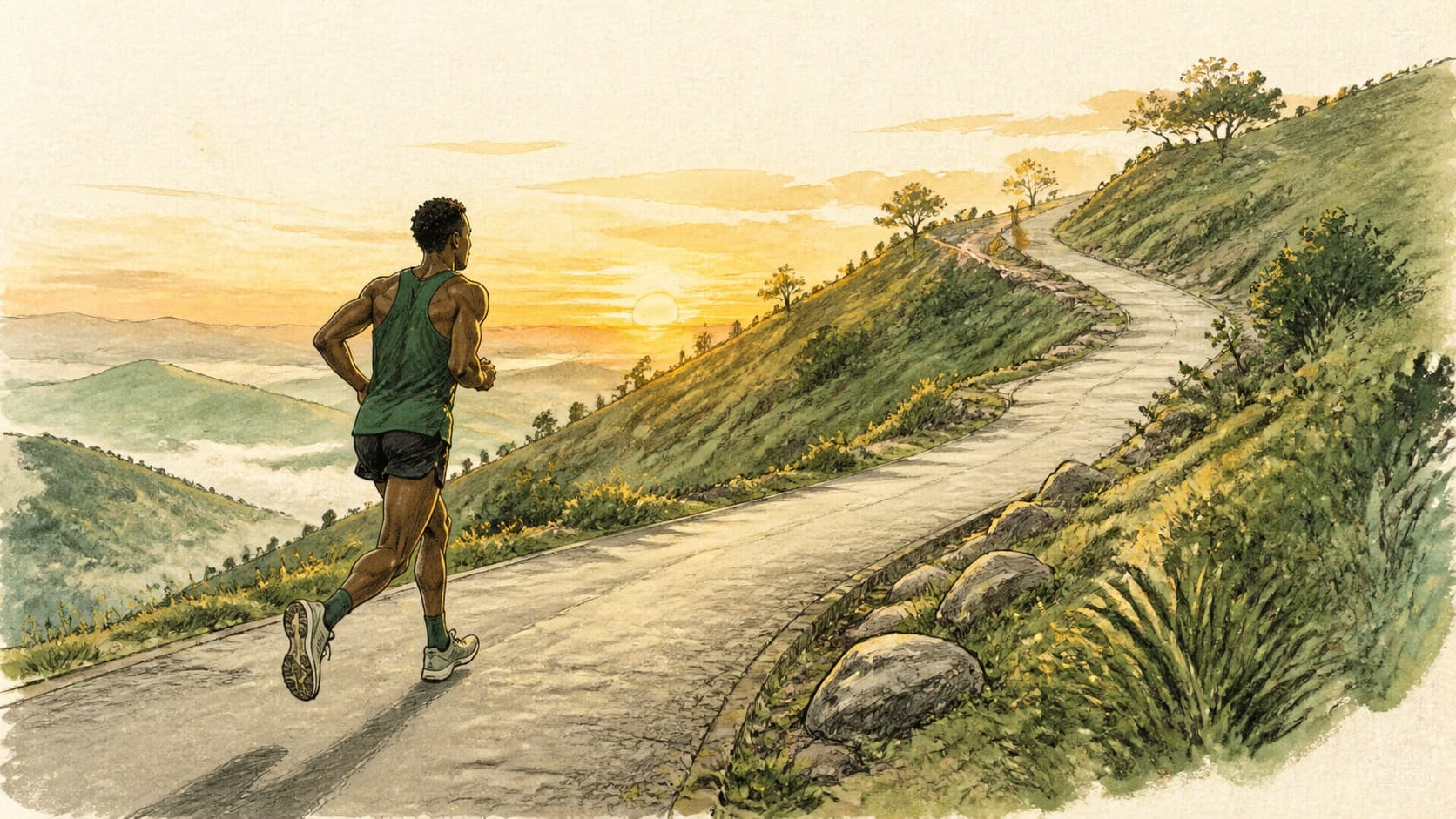
Your pace slows uphill because each stride must raise your body against gravity. Holding flat-ground pace would require much more energy, so a slower pace can still represent the same effort. Compare hilly runs by route, grade, heart rate, and perceived effort instead of pace alone.
Flat pace is a poor yardstick for a hill. On a climb, part of your work goes into gaining elevation. Slowing down is often how you keep the effort from climbing with it.
What grade changes
Research on graded running consistently shows that uphill running costs more energy than level running at the same speed. A review of uphill and downhill running found that positive grade increases energy cost and the mechanical work performed by the legs. Runners also tend to shorten their time in the air and take quicker steps as the slope rises.
One controlled study put runners on a 5% treadmill incline while they held the same threshold pace used on the flat. Oxygen use rose by about 18% to 19%, and heart rate rose by about 10% to 11%. The exact change will not transfer cleanly to an outdoor hill, but the direction is useful: matching flat pace asks for more than matching flat effort.
Downhill running is different. Its aerobic cost can fall on moderate descents, but your muscles absorb more force through eccentric contractions. A fast downhill split can therefore look easy in pace data while leaving more muscular fatigue than the heart-rate trace suggests.
How to compare hilly runs
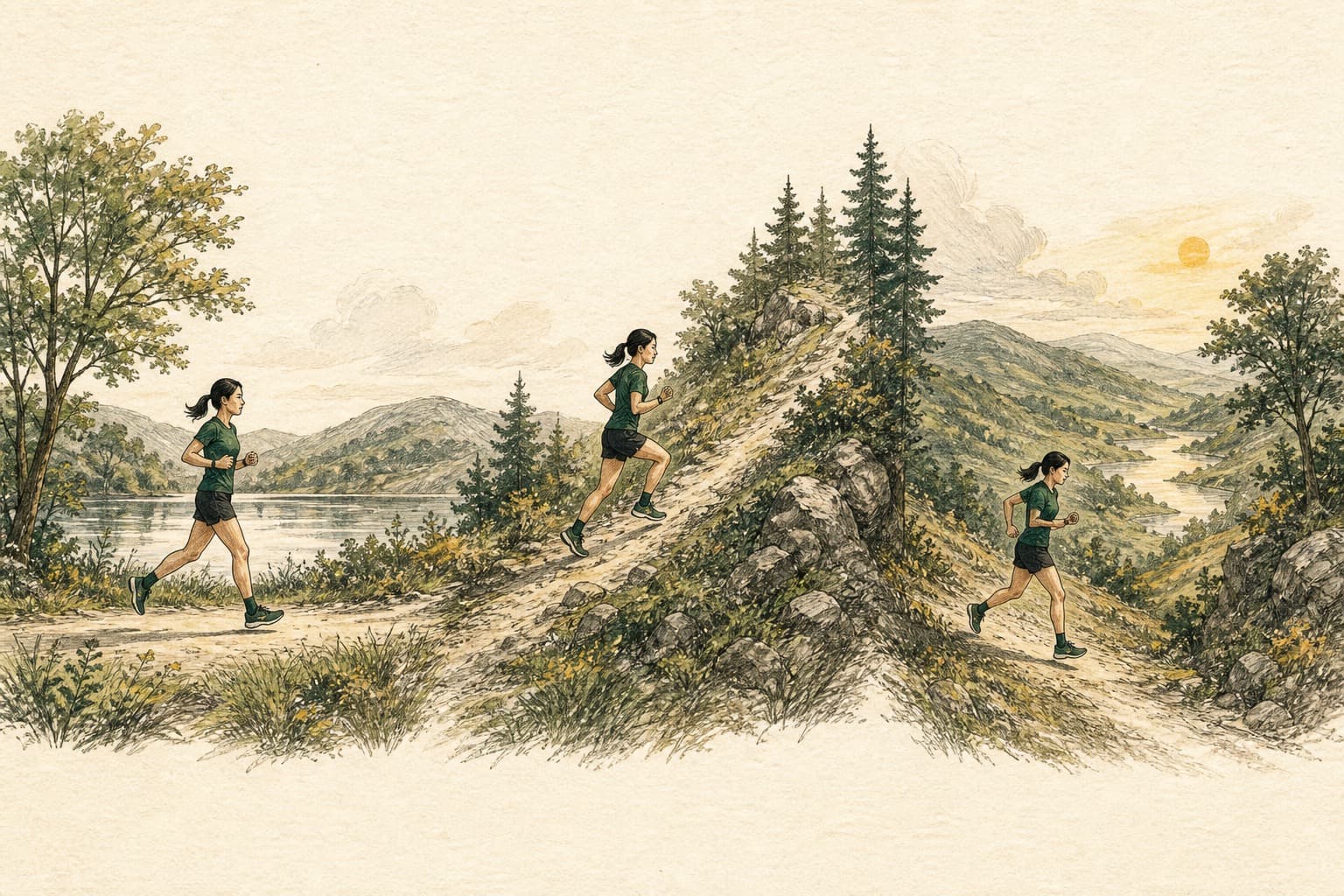
Start with the route. Compare repeated runs on the same course, or group runs with similar total climbing and similar grade distribution. Total elevation gain alone misses an important distinction between one long climb and a series of short, steep rises.
Then read pace with effort:
- On a sustained climb, pace may slow before heart rate settles at the new workload.
- On rolling ground, average pace can hide repeated surges and recoveries.
- On a descent, faster pace does not necessarily mean lower muscular cost.
- On trails, footing and turns can matter as much as elevation.
Heart rate and perceived effort help, but neither removes the route from the comparison. Short climbs may end before heart rate catches up. Heat, fatigue, wind, and altitude can change the same route from one day to another.
When a slower hill pace is still a good run
For an easy run, the goal is usually to keep the effort easy. Letting pace fall on a climb can be the correct execution. For a hill workout, compare repeat time, grade, recovery, and effort across similar sessions. For a steady or tempo run, judge whether the effort stayed controlled through the terrain instead of asking every split to match.
A slower hilly run is more concerning when the difference persists on the same route under similar conditions and comes with an unusual rise in effort or heart rate. One slow climb, by itself, says little about fitness.
Yigri can place pace, heart rate, and elevation on the same timeline. That keeps a hill from being mistaken for a fitness change.
Methodology and limits
This guide interprets one review of graded running and two controlled treadmill studies. Their findings explain how slope changes energy cost and cardiovascular demand, but they do not provide a universal grade-adjusted pace formula for individual runners or outdoor routes.
- Treadmill grades do not capture uneven footing, turns, wind, altitude, or the changing slopes of an outdoor route.
- Heart rate responds with a delay, especially on short hills, so it may understate the effort of brief climbs.
- Downhill pace is also shaped by technique, confidence, surface, and muscle damage, not only by aerobic cost.